










Is Tattoo Removal a Profitable Skill? What Training Do You Need?
Tattoo removal has become one of the fastest growing and most profitable treatments in the laser and aesthetics industry UK. With millions of adults in the United Kingdom now having tattoos, demand for safe and effective removal continues to rise. Many practitioners and clinic owners are adding laser tattoo removal training UK to their treatment menu as a reliable way to build recurring revenue and expand their client base.
This article explains how profitable tattoo removal can be, what affects your earning potential, and which regulated VTCT qualifications you must complete before offering this treatment professionally. You'll also find realistic earnings projections based on session pricing and client volume across different business models.
Why laser tattoo removal training UK and demand is increasing
Laser tattoo removal training UK has moved from niche to mainstream aesthetic treatment. Demand continues to grow due to:
- An increase in the number of people getting tattoos
- Advanced laser technology that makes removal faster and safer
- Clients preparing tattoos for cover-ups
- Lifestyle or career changes that require tattoo removal
- Removal of low-quality, outdated or unwanted tattoos
- Increased public awareness of safe laser removal
The result is a consistently growing market with strong repeat business, creating an excellent opportunity for trained practitioners.
Is laser tattoo removal training and profitability worth the investment?
Yes. Tattoo removal is known for high profitability, low consumable cost, and strong client retention. Unlike single-session treatments, laser tattoo removal training UK qualifications enable practitioners to offer courses of regular sessions (typically 6-12), generating consistent recurring income. This repeat-treatment model is one of the most attractive revenue streams in the aesthetic industry.
Typical UK Treatment Prices
Pricing varies based on tattoo size, colours and density. Common pricing includes:
- Extra small tattoos: £40 to £60 per session
- Small tattoos: £60 to £90 per session
- Medium tattoos: £90 to £150 per session
- Large tattoos: £150 to £250 per session
Most clients require 6 to 12 sessions, depending on tattoo depth, ink type and skin response.
Example Earnings Per Year
Below are realistic earning examples based on working 42 to 46 weeks per year. This accounts for holidays, quiet periods, training days and natural time off.
Tattoo Removal Earnings Tables
Realistic Calculations for 42 to 46 Working Weeks Per Year
Tattoo removal is a repeat-treatment service with excellent earning potential. The tables below show estimated annual revenue based on common UK pricing and realistic working patterns of 42 to 46 weeks per year.
Earnings Based on £75 Average Session Price
| Weekly Clients | Weekly Revenue | Annual Revenue (42 Weeks) | Annual Revenue (46 Weeks) |
|---|---|---|---|
| 10 clients | £750 | £31,500 | £34,500 |
| 15 clients | £1,125 | £47,250 | £51,750 |
| 20 clients | £1,500 | £63,000 | £69,000 |
Earnings Based on £95 Average Session Price
| Weekly Clients | Weekly Revenue | Annual Revenue (42 Weeks) | Annual Revenue (46 Weeks) |
|---|---|---|---|
| 10 clients | £950 | £39,900 | £43,700 |
| 15 clients | £1,425 | £59,850 | £65,550 |
| 20 clients | £1,900 | £79,800 | £87,400 |
Earnings Based on £120 Average Session Price
| Weekly Clients | Weekly Revenue | Annual Revenue (42 Weeks) | Annual Revenue (46 Weeks) |
|---|---|---|---|
| 10 clients | £1,200 | £50,400 | £55,200 |
| 15 clients | £1,800 | £75,600 | £82,800 |
| 20 clients | £2,400 | £100,800 | £110,400 |
These projections demonstrate how laser tattoo removal training UK and subsequent service delivery can become a significant and stable revenue stream even when offering treatment part-time. The key to profitability is combining quality VTCT qualifications, professional insurance, strong consultation skills, and realistic client management (spacing sessions 6-8 weeks apart for skin healing).
For more detailed commercial planning, see our comprehensive guide: laser tattoo removal course cost UK and ROI.
What training do you need for laser tattoo removal training UK?
Tattoo removal is classed as a laser treatment and requires regulated, Ofqual-approved qualifications. The correct VTCT laser tattoo removal training UK pathway is essential for professional indemnity insurance, safety, legal compliance, and council licensing requirements. This is not an optional credential - insurers and local authorities mandate VTCT Level 4 and Level 5 qualifications.
Below is the recognised VTCT pathway for laser tattoo removal training UK delivered by Cosmetic College, spanning 3-6 months depending on your starting point.
Step 1: Level 3 Foundation Qualification (if needed)
For beginners or those without prior beauty or laser experience, start with Level 3 foundation qualifications.
VTCT Level 3 Certificate in Access to Aesthetic Therapies
https://www.cosmetic.college/courses/vtct/level-3-certificate-in-access-to-aesthetic-therapies/
This qualification provides essential theory in:
- Skin anatomy and physiology
- Wound healing and skin response to injury
- Contraindications and client screening
- Consultation and informed consent protocols
- Professionalism, hygiene, and infection control
It prepares you for laser-based qualifications at Levels 4 and 5 and is often required before laser tattoo removal training UK progression.
Mandatory Safety Course: Basic Life Support and Anaphylaxis Management
VTCT Level 3 Award in Basic Life Support and Management of Anaphylaxis
This award is required by most insurers and strongly recommended for all laser practitioners. It covers emergency response, airway management, and anaphylaxis protocols - critical for client safety in laser treatment environments.
Step 2: Level 4 Laser Qualification (MANDATORY PREREQUISITE)
Before specialising in laser tattoo removal training UK, you must complete VTCT Level 4 laser training. This is a non-negotiable prerequisite for Level 5 tattoo removal and is required by all insurers.
VTCT Level 4 Certificate in Laser and IPL Treatments
https://www.cosmetic.college/courses/vtct/laser-hair-removal/
This qualification covers essential foundation knowledge:
- Laser and light physics (wavelengths, penetration depth, energy delivery)
- Laser safety protocols and eye protection
- Fitzpatrick skin phototyping and skin response assessment
- Managing adverse skin reactions and complications
- Laser hair removal techniques and client management
- Skin rejuvenation technologies and safety margins
The Level 4 Laser Certificate is a mandatory prerequisite before progressing to laser tattoo removal training UK at Level 5. You cannot skip this step - insurers and local authorities require documented Level 4 competency.
Step 3: Level 5 Laser Tattoo Removal Qualification (SPECIALISATION)
This is the formal regulation-required qualification for professional tattoo removal delivery. This is where laser tattoo removal training UK becomes specialist and profitable.
VTCT Level 5 Certificate in Laser Tattoo Removal
https://www.cosmetic.college/courses/vtct/level-5-certificate-in-laser-tattoo-removal/
This advanced qualification covers specialised techniques and technology:
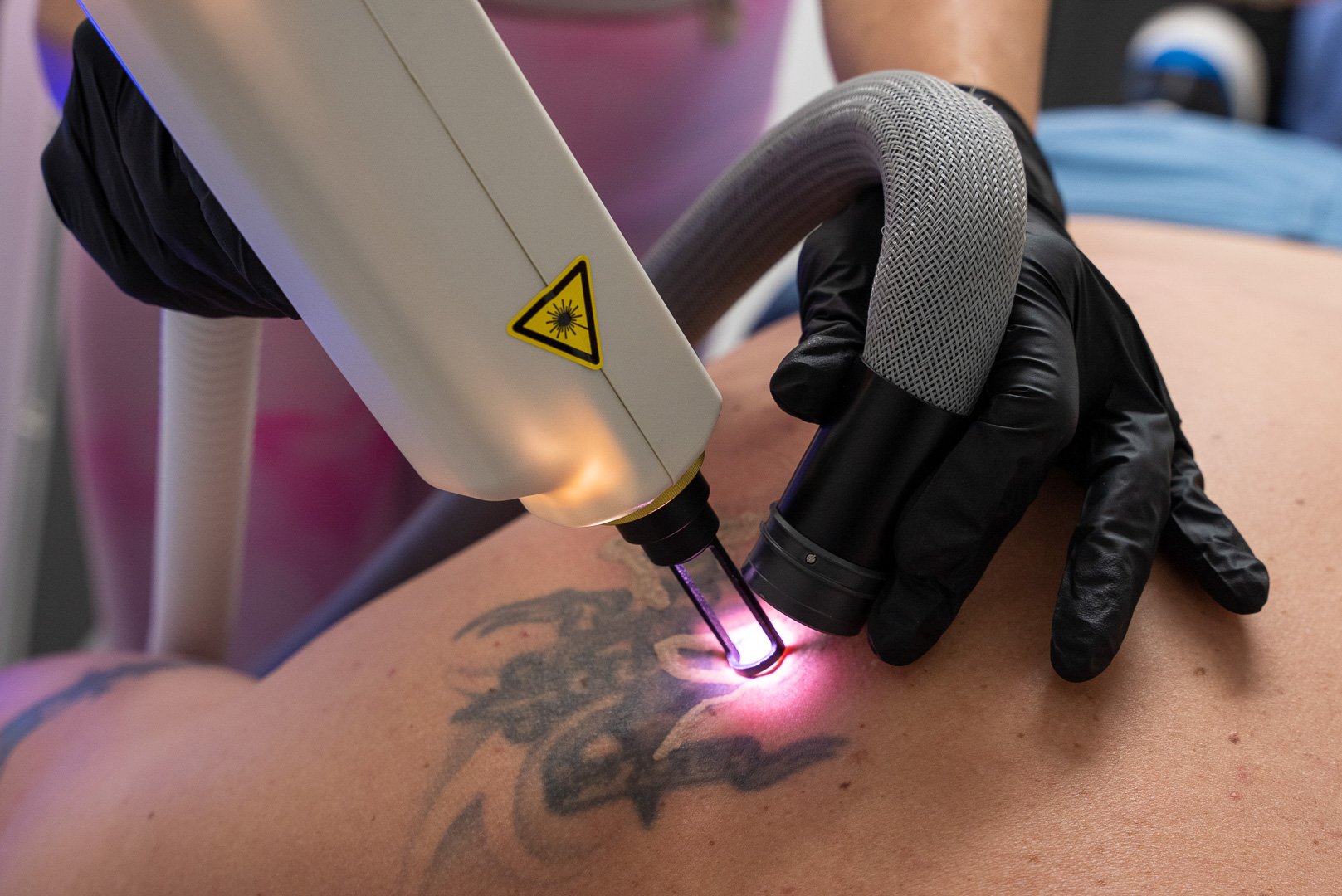
- Q-Switched Nd:YAG lasers (standard for black, dark blue, and most coloured inks)
- Picosecond laser systems (faster results, better for challenging colours like turquoise and purple)
- Selective photothermolysis principles (how laser energy targets ink without damaging skin)
- Laser-tissue interaction for different tattoo pigments and ink compositions
- Techniques for black and multi-coloured inks (including professional vs amateur tattoos)
- Tattoo depth assessment and ink composition analysis
- Client selection and contraindications (skin tone, health conditions, medications, pregnancy)
- Safety protocols and laser eye protection standards
- Managing complications (blistering, hypopigmentation, infection, laser-induced inflammation)
- Live model tattoo removal treatments (supervised practical assessment)
Completion of VTCT Level 5 makes you fully insurable with professional indemnity and eligible for council licensing (Special Treatment Licence) in most UK regions. This qualification is the industry gold standard and differentiates you from unqualified competitors.
Do you need a licence to offer laser tattoo removal in the UK?
Licensing requirements vary by local authority, but most councils now require:
- Special Treatment Licence from your local authority (usually £150-500/year depending on region)
- Proof of Level 4 and Level 5 laser qualifications (VTCT or equivalent Ofqual-approved)
- Laser Protection Adviser (LPA) risk assessment conducted by a qualified assessor
- Infection control protocols and hygiene documentation
- Sharps and clinical waste disposal contract with approved waste handler
- Approved treatment room standards (safety, ventilation, signage, emergency procedures)
- Professional indemnity insurance (typically £150-300/year)
Upcoming Health and Care (Register) Act 2022 provisions will further reinforce the mandatory requirement for regulated training like VTCT. Non-regulated practitioners may face legal challenges and loss of insurance cover.
For guidance on licensing and insurance requirements for your specific region, see how to get insurance for VTCT aesthetic treatments.
Is laser tattoo removal training a good business opportunity?
Yes. Laser tattoo removal training UK and subsequent service delivery is a strong business opportunity due to:
- High local demand: Most clinics report 6-month waiting lists for quality practitioners
- High profit margins: Sessions priced £50-250+ with low consumable costs (ink pigment targeting, minimal supplies)
- Low consumable costs: No cartridges or regular supplies like hair removal; mainly electricity and eyewear
- Repeat client bookings: Average 6-12 sessions per client creates predictable recurring revenue (not single-session dependent)
- Strong ROI for laser equipment: Equipment investment typically recouped within 12-18 months if client volume is consistent
- Opportunities for specialist branding: Positioning as "certified tattoo removal expert" justifies premium pricing
- Service expansion potential: Cross-sell with hair removal, skin rejuvenation, and other laser services
It is suitable for aesthetic practitioners, clinic owners, tattoo artists, beauty therapists, established salons, and those seeking a new career. The combination of professional demand, regulatory barriers to entry, and high profitability makes it one of the most attractive specialist services in aesthetics.
Review detailed profitability projections and planning in our complete earnings and training guide.
How to get started with laser tattoo removal training UK
To become a fully qualified, insurable, and council-licensed tattoo removal practitioner, complete this VTCT progression:
- VTCT Level 3 Certificate in Access to Aesthetic Therapies (if you lack prior aesthetic training)
- VTCT Level 3 Award in Basic Life Support and Management of Anaphylaxis (mandatory for all)
- VTCT Level 4 Certificate in Laser and IPL Treatments (prerequisite for Level 5)
- VTCT Level 5 Certificate in Laser Tattoo Removal (specialisation and professional credibility)
Cosmetic College delivers every qualification in this progression with hands-on training, small groups, expert supervision, and post-course mentoring support throughout your learning journey.
Start your laser tattoo removal training UK journey now
Request a callback from our admissions team to discuss your current level, recommended pathway, and available course dates.
Explore all VTCT qualifications in the laser and aesthetics pathway: VTCT course hub
Plan your individualised progression route with expert guidance: Pathway to Aesthetics assessment tool
Check upcoming practical training dates and book your cohort: Training Course Calendar
Explore related guides in this laser training cluster:
Editorial Standards
Author
Cosmetic College Editorial Team
Aesthetic Education Editorial Team
Cosmetic College specialists and admissions advisers produce this content to help learners choose regulated progression routes and make safer, better-informed training decisions.
Review cycle
Published: 24 November 2025
Last reviewed: 24 November 2025
Reading time: 8 min
Sources and References
- Laser Hair Removal and Laser Tattoo Removal Training At The Cosmetic Collegecosmetic.college
- laser tattoo removal course cost UK and ROIcosmetic.college
- https://www.cosmetic.college/courses/vtct/level-3-certificate-in-access-to-aesthetic-therapies/cosmetic.college
- https://www.cosmetic.college/courses/vtct/level-3-award-in-basic-life-support-aed-and-management-of-anaphylaxis/cosmetic.college
- https://www.cosmetic.college/courses/vtct/laser-hair-removal/cosmetic.college
- https://www.cosmetic.college/courses/vtct/level-5-certificate-in-laser-tattoo-removal/cosmetic.college
- how to get insurance for VTCT aesthetic treatmentscosmetic.college
- our complete earnings and training guidecosmetic.college
- Request a Callbackcosmetic.college
- VTCT course hubcosmetic.college
- Pathway to Aesthetics assessment toolcosmetic.college
- Training Course Calendarcosmetic.college