










Searching for laser hair removal course price UK usually returns very different fee points. The gap is often explained by qualification depth, supervision quality, and progression support. The VTCT Level 4 Certificate in Laser and Intense Pulsed Light (IPL) Treatments is the Ofqual-regulated standard, and pricing varies significantly based on delivery model and practical intensity.
Why prices vary so much
Price differences often come from:
- Ofqual-regulated vs non-regulated course structure
- Practical contact depth and tutor supervision
- Assessment complexity and support model
- Included pathway guidance and admissions support
- Blended learning platform access and ongoing learner support
Review route structure first, then compare fee levels against outcomes. For context on what's actually taught in a level 4 laser course, see our VTCT Level 4 course breakdown.
What's typically included in the fee
Understanding what's bundled into a course price helps you compare fairly. Here's what most VTCT Level 4 programmes include and where hidden costs appear.
Standard inclusions
Online theory platform access: Blended VTCT routes include access to online learning content covering laser physics, IPL science, Fitzpatrick skin typing, contraindication assessment, and aftercare protocols. Access is usually lifetime or for the duration of enrolment (typically 12 months).
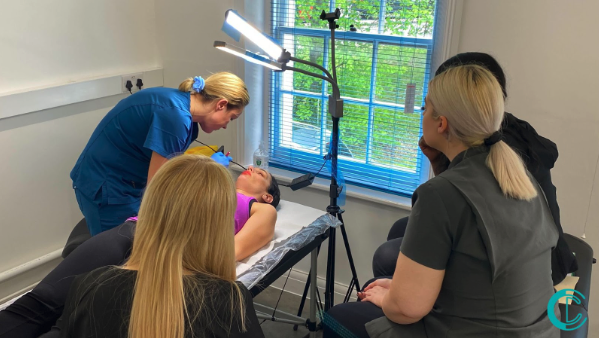
In-person practical days: Most Level 4 routes include 4–8 supervised practical days scheduled in-person. These sessions cover device operation, safety checks, parameter selection, treatment delivery, and live model or dummy treatments. Practical days are essential for building confidence and meeting assessment requirements.
Live model treatments: Quality programmes include time treating real clients (or trained practice models) under tutor supervision. This experience is critical for developing realistic consultation and treatment skills.
Assessment and materials: Course fees typically cover theory assessment (written exams or online tests), practical assessment with feedback, and learner materials (course guides, safety protocols, case study packs). Some providers include printed workbooks; others provide digital access only.
Tutor feedback sessions: One-to-one or small-group feedback is often included during practical days and after assessments. This guidance helps you understand gaps and refine technique.
Common add-on costs to budget for
Reassessment fees: If you don't pass an assessment on first attempt, reassessment usually costs £100–£300 per component, depending on the provider.
Additional practical days: Some learners benefit from extra supervised practice beyond the standard allocation. Additional practical days typically cost £150–£300 per day.
Extended enrolment: If you need more time to complete assessments or practicals, extension fees may apply (typically £50–£200 per month).
Insurance and compliance: Professional indemnity insurance (£100–£300/year) and council Special Treatment Licence (£50–£500, varies by local authority) are separate from course fees but essential before launching services.
Quality indicators in pricing
Higher-priced programmes often reflect:
- More intensive practical supervision (smaller groups, more tutor contact)
- Longer in-person practical duration (8+ days vs 4–5 days)
- More comprehensive live model treatment opportunities
- Stronger post-qualification support and mentoring
- More robust pathway planning and career guidance before and after qualification
Lower-priced programmes may:
- Rely more heavily on online-only theory delivery
- Limit practical days or group size (less individual feedback)
- Offer minimal reassessment support
- Provide limited post-qualification guidance
Ask potential providers for detailed breakdowns of what's included and whether reassessment, additional practicals, or support are extra costs.
A practical pricing framework
Use this framework before committing:
- Qualification value: does the route support long-term progression?
- Practical depth: how much supervised treatment practice is included?
- Support quality: are you getting feedback that improves real delivery?
- Commercial readiness: does it help you move toward insurable, high-demand services?
Price vs value for progression-focused learners
For many learners, the best value decision is not the lowest upfront fee. The stronger decision is the route that reduces delays, prevents re-training, and positions you to scale services confidently.
Compare options against VTCT laser hair removal course and map realistic attendance through the training calendar. If you're in London, you might also review our VTCT laser hair removal London guide for location-specific options.
Hidden cost risks to avoid
Potential hidden costs include:
- Additional training needed to meet progression requirements
- Lost earning time from weak practical confidence
- Reassessment or delayed completion from poor schedule fit
Get route clarity first via Pathway to Aesthetics and a callback consultation.
Total cost of getting laser-qualified
To budget realistically, factor in all costs beyond the headline course fee.
Full cost breakdown
| Cost item | Typical range | Notes |
|---|---|---|
| VTCT Level 4 course fee | £1,500–£4,000 | Varies by provider and delivery intensity |
| Reassessment fees (if needed) | £100–£300 | Per component; not all learners need this |
| Professional indemnity insurance (annual) | £100–£300 | Essential before practising |
| Special Treatment Licence (local council) | £50–£500 | One-time or renewable depending on council |
| Equipment setup (if self-employed) | £8,000–£25,000+ | Laser/IPL device purchase; can share clinic costs if employed |
| Initial consumables and PPE | £200–£500 | Protective eyewear, cooling gel stock, treatment packs |
| CPD and ongoing professional development (annual) | £200–£800 | Staying current with technology and safety protocols |
Realistic first-year investment (non-equipment scenario)
If you're building a laser service as an employed practitioner or renting clinic chair space (avoiding major equipment investment):
- Course fee: £1,500–£4,000
- Insurance: £100–£300
- Licence and compliance: £50–£500
- Initial supplies: £200–£500
- Total: £1,850–£5,300
If you're building as a self-employed practitioner with your own equipment:
- Course fee: £1,500–£4,000
- Equipment purchase: £8,000–£25,000
- Insurance: £100–£300
- Licence: £50–£500
- Supplies: £200–£500
- Total: £9,850–£30,300
Time to profitability
Most practitioners break even on training investment within 3–6 months of launching laser services, assuming:
- Regular client bookings (10–15 sessions per week minimum)
- Competitive pricing (£50–£150 per treatment area)
- 60–75% gross margin after consumables and overheads
A practitioner running 15 laser treatments per week at an average of £100 per treatment generates £1,500/week or £6,000/month in gross revenue. After consumables (~£100/month) and other overheads, profitability is typically achieved quickly.
Cost reduction strategies
- Pursue employment first: Start as an employed laser practitioner to build expertise and client base without equipment investment.
- Share clinic costs: Partner with an existing clinic to rent chair or treatment space rather than leasing or buying full equipment.
- Staged progression: Complete Level 4 first, build revenue, then progress to Level 5 tattoo removal when cash flow supports it.
- Research local council requirements: Some areas have lower Special Treatment Licence fees; confirm before choosing practice location.
How to shortlist confidently
| Question | Strong answer |
|---|---|
| Is the route progression-safe? | Clear next-step options after completion |
| Is practical delivery robust? | Supervised, feedback-led sessions |
| Is the schedule realistic? | Dates match your capacity and pace |
| Is there admissions guidance? | Clear advice before payment |
If you also want to add tattoo removal later, compare with Level 5 laser tattoo removal before deciding.
FAQ
What is the average laser hair removal course price in the UK? VTCT Level 4 fees typically range based on delivery model (online theory vs blended with onsite practicals), tutor support intensity, and locale. Full blended programmes with robust practical supervision generally cost more than online-only routes.
Is the cheapest course usually best value? Not always. Lower fees can create higher long-term cost if progression or confidence is weak. A course costing slightly more but offering stronger tutor feedback and clearer progression support often pays dividends through faster client acquisition and fewer safety re-assessments.
Should I compare by qualification level first? Yes. The VTCT Level 4 is the industry standard for laser hair removal qualification UK. Ensure any route you compare is Ofqual-regulated and recognized by insurance providers.
Can I finance training decisions over stages? Many learners plan staged progression aligned to available dates and budget. See our career progression after VTCT Level 4 guide to map long-term learning costs.
What hidden costs should I budget for? Factor in professional indemnity insurance (£100–£300/year), potential reassessment fees (£100–£300 per component), local council Special Treatment Licence (£50–£500), and any additional support or CPD updates beyond the initial qualification. Check eligibility first via Request a Callback to avoid surprise prerequisites.
How much does professional indemnity insurance cost for laser practitioners? Professional indemnity insurance for laser hair removal services typically costs £100–£300 per year, depending on your claims history, clinic setup, and insurer. Most insurers require proof of VTCT Level 4 qualification before offering cover, so budget for insurance as a non-negotiable ongoing cost.
What is a Special Treatment Licence and do I need one? Many local councils in the UK classify laser and IPL treatments as "special treatments" and require practitioners to register or obtain a licence. Requirements vary widely - some councils charge £50, others up to £500, and some have no requirement. Contact your local environmental health department before launching services to confirm requirements in your area.
Can I work part-time with laser hair removal and still break even on my training investment? Yes. Even practitioners running 5–10 laser treatments per week alongside other services can break even within 6–12 months, depending on treatment pricing and local demand. Part-time practice takes longer to profitability but is realistic; focus on building a regular client base rather than chasing high volume immediately.
Is it worth paying more for a higher-fee laser course? Often yes, if the higher fee reflects better practical supervision, longer in-person training, more experienced tutors, and stronger post-qualification support. A course costing £3,000 with 8 practical days and robust feedback may offer better value than a £1,500 course with 3 practical days. Compare specific offerings, not just headline price.
Editorial Standards
Author
Cosmetic College Editorial Team
Aesthetic Education Editorial Team
Cosmetic College specialists and admissions advisers produce this content to help learners choose regulated progression routes and make safer, better-informed training decisions.
Review cycle
Published: 25 January 2026
Last reviewed: 25 January 2026
Reading time: 7 min
Sources and References
- VTCT Level 4 course breakdowncosmetic.college
- VTCT laser hair removal coursecosmetic.college
- training calendarcosmetic.college
- VTCT laser hair removal London guidecosmetic.college
- Pathway to Aestheticscosmetic.college
- callback consultationcosmetic.college
- Level 5 laser tattoo removalcosmetic.college
- career progression after VTCT Level 4cosmetic.college